
Independent data reveals smaller Indian cities outpacing major metros in hiring growth
By BizRadar News Desk | October 2026
India’s Job Growth Story Is Moving Beyond the Metros
India’s employment landscape is undergoing a geographical shift. While Bengaluru, Mumbai, Delhi NCR and Pune remain important corporate centres, smaller cities are recording some of the country’s strongest growth in white-collar hiring activity.



An independent analysis published by CapitalVia Research Desk on September 27, 2026, using Naukri JobSpeak data for August, found that eight of the ten fastest-growing job markets were outside the traditional major metros. Gandhinagar topped the list with 44% year-on-year growth, followed by Bhubaneswar at 32% and Rajkot at 29%.
The findings suggest that employment opportunities are expanding beyond India’s established technology and financial centres. However, growth in job listings does not necessarily mean an equivalent increase in jobs filled or total employment.
Top 10 Fastest-Growing Job Markets in India
The following ranking is based on the year-on-year change in Naukri JobSpeak’s city-level hiring index for August 2026, as reported by CapitalVia Research Desk.
| Rank | City | Hiring activity growth |
|---|---|---|
| 1 | Gandhinagar | 44% |
| 2 | Bhubaneswar | 32% |
| 3 | Rajkot | 29% |
| 4 | Nellore | 27% |
| 5 | Visakhapatnam | 26% |
| 6 | Varanasi | 25% |
| 7 | Hyderabad | 23% |
| 8 | Raipur | 23% |
| 9 | Kolkata | 22% |
| 10 | Surat | 21% |
Source: CapitalVia Research Desk analysis of Naukri JobSpeak, August 2026. These percentages represent year-on-year changes in the hiring activity index, not the number of new jobs created.
Why Are Smaller Cities Gaining Momentum?
1. Gandhinagar: Gujarat’s emerging employment centre
Gandhinagar recorded the highest growth in the analysis, at 44%. Its wider business ecosystem, proximity to Ahmedabad and access to financial, technology and professional services industries make the region an important employment market to watch.
2. Bhubaneswar: Technology and services expand
Bhubaneswar has developed a presence in IT services, business operations, education and technology-led services. Its growth highlights the potential for eastern India to attract more organised employment opportunities.
3. Rajkot: Industrial growth meets modern business
Rajkot’s traditional strengths include engineering, manufacturing, machinery and industrial businesses. Growing demand for technical, sales, operations and management talent could support its broader employment ecosystem.
4. Nellore: An emerging market to watch
Nellore’s 27% increase in hiring activity places it among the fastest-growing cities in the analysis. Its industrial, logistics and regional business activity make it worth monitoring, although the hiring index alone cannot establish which sectors contributed most to the increase.
5. Visakhapatnam: A diversified economic base
Visakhapatnam combines port operations, pharmaceuticals, manufacturing and technology-related activity. The city is also attracting attention as an emerging employment destination beyond India’s traditional metropolitan centres.
6. Varanasi: Employment beyond traditional urban hubs
Varanasi recorded 25% growth in the hiring index. Its regional services economy, tourism, trade and developing business activity provide a broader context for its employment potential. The data does not, however, establish which individual sectors drove the increase.
7. Hyderabad: A major metro continues to grow
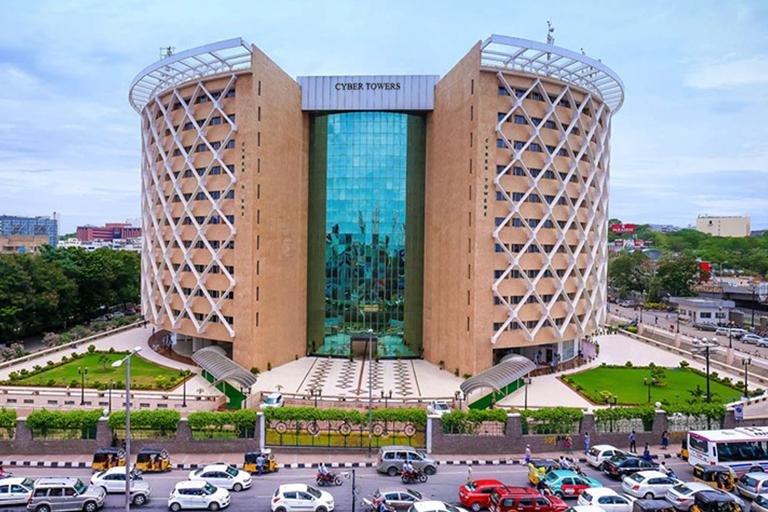
Hyderabad was the fastest-growing major metro in this top-ten list, with 23% growth. The city has an established presence in IT services, global capability centres, pharmaceuticals and financial services, giving job seekers opportunities across technical and corporate functions.
8. Raipur: Central India’s expanding business market
Raipur’s economy includes steel, mining-related services, construction, logistics and commercial operations. Its 23% growth in hiring activity points to a market worth tracking for engineering, sales, operations and business-support roles.
9. Kolkata: Eastern India’s established corporate centre
Kolkata recorded 22% year-on-year growth. Its IT services, financial operations, logistics and professional services sectors continue to make it relevant to job seekers in eastern India.
10. Surat: A traditional industry adapts
Surat’s established diamond and textile industries are complemented by trade, exports, real estate and services. Its 21% growth indicates rising hiring activity, although the index does not reveal how much of that growth came from each industry.
What About Bengaluru, Mumbai and Delhi NCR?
The results do not mean that India’s largest job markets are losing their importance. Instead, they show that the rate of hiring growth and the overall size of a job market are different measures.
In the same August 2026 comparison, white-collar hiring activity grew by 14% nationally. Hyderabad grew by 23%, Kolkata by 22%, Chennai by 20%, Bengaluru by 14%, Pune by 14%, Delhi NCR by 10% and Mumbai by 7%.
Bengaluru remains a major destination for technology professionals, while Mumbai continues to be important for banking, financial services and corporate roles. Delhi NCR retains a diverse business base, and Pune and Chennai remain significant technology and engineering centres.
A smaller city can therefore record faster percentage growth without having more vacancies than a major metro.
Which Industries Offer Opportunities in These Cities?
The city-level growth figures do not identify the precise sectoral contribution in each location. Nevertheless, the economic profiles of these cities suggest several areas that job seekers can investigate.
- Technology and IT services: Bengaluru, Hyderabad, Bhubaneswar and Visakhapatnam.
- Banking and financial services: Mumbai, Hyderabad, Gandhinagar and Kolkata.
- Engineering and manufacturing: Rajkot, Surat, Raipur and the wider Gujarat industrial region.
- Logistics and industrial operations: Visakhapatnam, Nellore, Raipur and Surat.
- Sales, business development and professional services: Opportunities across both major metros and regional commercial centres.
Candidates should verify current vacancies, required qualifications and salary ranges before making relocation decisions. Industry presence alone does not guarantee that a city has a high number of open positions.
What Does This Mean for Job Seekers?
The emerging pattern creates opportunities for candidates willing to look beyond the traditional metro destinations.
First, job seekers may find suitable positions in regional markets without relocating to the country’s most expensive urban centres. Second, employers expanding outside major metros could increase demand for engineering, technology, sales and operational skills. Third, professionals should compare salary offers with housing, transportation and other living costs rather than choosing a location based only on hiring growth.
There is also an important limitation: a 44% increase in a hiring index does not necessarily represent more vacancies than a 7% increase in a much larger market. The number of openings, the types of jobs available and the quality of employment all matter.
Conclusion: India’s Employment Map Is Becoming More Diverse
The August 2026 hiring data points to a more distributed employment landscape, with Gandhinagar, Bhubaneswar, Rajkot, Nellore and Visakhapatnam among the fastest-growing markets.
For businesses, this trend may create opportunities to access talent in new locations. For job seekers, it offers a reason to broaden their search beyond India’s biggest metros.
The key takeaway is not that traditional job centres have lost their relevance. It is that the fastest-growing employment market may not always be the largest one.
Source and methodology: CapitalVia Research Desk, “India’s fastest-growing job market is not a metro,” September 27, 2026, based on Naukri JobSpeak’s August 2026 city-level hiring index. The index measures hiring activity reflected in job listings and recruiter activity; it is not a direct count of jobs filled or net employment created.
#Jobs in India, Hiring Trends 2026, #Employment News,#Naukri JobSpeak, #Gandhinagar Jobs, #Bhubaneswar Jobs,#Tier 2 Cities, #Indian Job Market